
Research
Browse My Research
Click a project below to jump to its full description.
Ongoing Projects
Completed Projects

Interaction Design
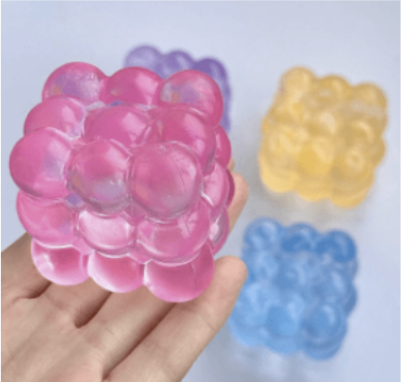
Tangible Interactions for Symptom Expression
Endometriosis affects approximately 10% of women of reproductive age worldwide and causes chronic pain, fatigue, and mood disturbances that fluctuate over time. Current tracking methods — including numerical pain scales, questionnaires, mobile apps, and wearables — struggle with recall bias, difficulty articulating subjective bodily experience, and high rates of user abandonment. Moreover, like many chronic illnesses, endometriosis diagnosis and symptom management rely heavily on patient self-report; symptom tracking therefore plays a critical role in supporting diagnosis, treatment, and ongoing management of the condition.
We focus on understanding how tangible interaction with physical objects can support the expression of the bodily experience of endometriosis symptoms. Using a soma design-based Research through Design methodology, we conducted five workshops with eight participants with endometriosis, in which participants interacted with a collection of 41 tangible objects to externalize their experience of pain, fatigue, and mood disturbances. These findings will inform the design of a symptom-tracking device that captures the lived, physical experience of endometriosis.
More details and findings to come as this project develops.
Robotic Wound Care
Descriptive Analysis of Manipulation Techniques in Wound Care
Robotics offers a promising way to help meet growing wound care demand amid a global nursing shortage, but understanding the manipulation demands of this hands-on, collaborative domain is a necessary first step.
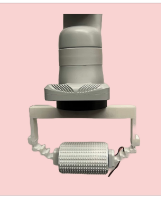
We contribute a descriptive analysis of manipulation approaches used during care, grouped into six areas: grasping, mobile manipulation, bi-manual manipulation, contact regions, common motions, and work area. For each, we describe the emergent strategies observed, the clinical context driving their use, and how strategies are employed for different subjects of manipulation (e.g., patients, the wound, or materials) and care tasks. Finally, we demonstrate how our findings within these manipulation areas can be used to inform robotic design through a case study in which we design and fabricate a wound dressing end effector.
This work builds directly on our earlier observational study, “Towards the Development of Wound Care Robots” (HRI 2024, Aging in Place Workshop).
Related papers:
- Descriptive Analysis of Manipulation Techniques in Wound Care (RO-MAN 2026) — coming soon
- Towards the Development of Wound Care Robots (HRI 2024, Aging in Place Workshop) — PDF Paper
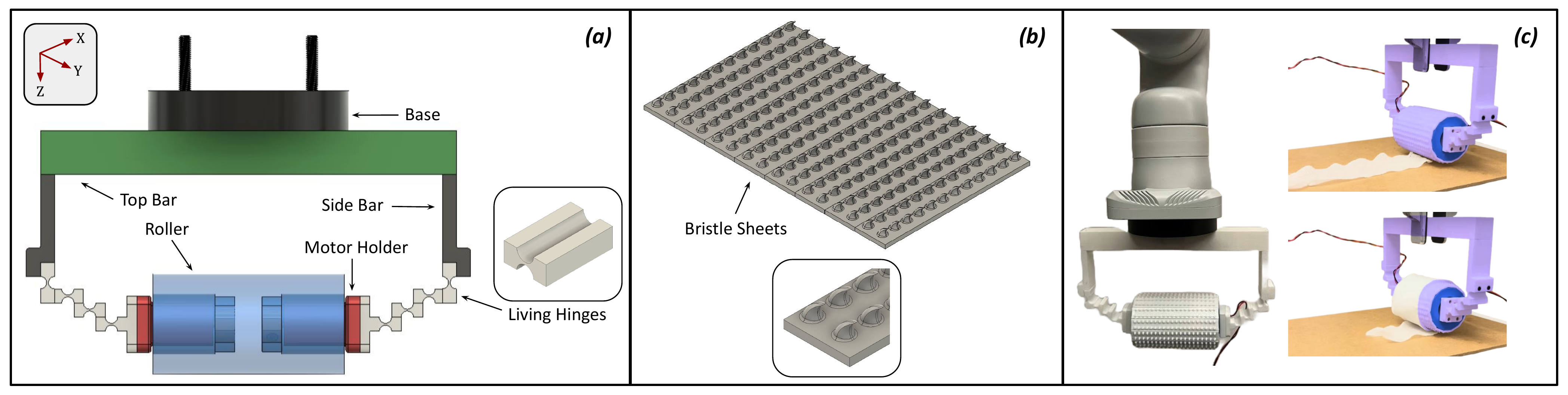
The process of developing our wound care robotic end effector: (a) CAD design of the roller mechanism, (b) fabrication of the 3D-printed bristle sheets, and (c) the completed end effector mounted on a Kinova robot arm during dressing pick and place task.
Haptics and Sensors Projects
Towards a ROS-based Modular Multi-Modality Haptic Feedback System for Robotic Minimally Invasive Surgery Training Assessments
Robotic minimally invasive surgery (RMIS) platforms like the da Vinci provide no haptic feedback of tool interactions with the surgical environment, forcing novice surgeons to rely solely on visual cues to sense their physical interactions — a limitation that can make training slow and difficult.
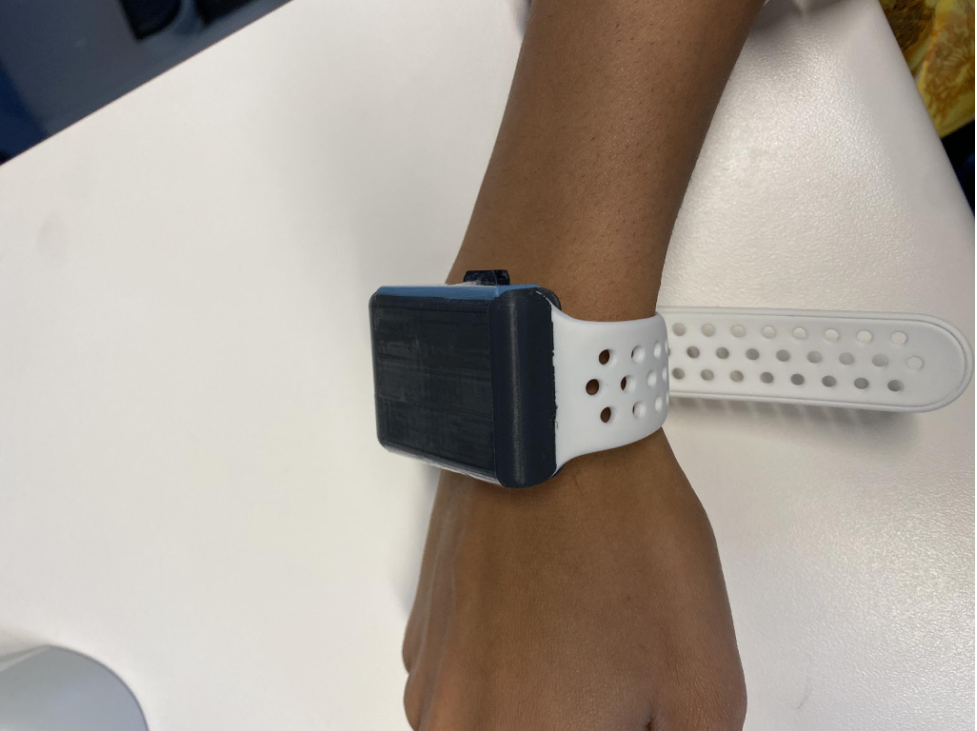
We built a ROS-based, modular multi-modality haptic feedback and data acquisition system that streams force and acceleration data from sensorized surgical tools in real time and renders it as wrist-squeezing or vibrotactile feedback through custom wrist-worn devices. We developed a Python-based signal processing pipeline and ran a user study with novice participants performing a peg-transfer task on a da Vinci robot, comparing wrist-squeezing, vibrotactile, and combined multi-modality feedback conditions. The system demonstrates the ability to run systematic, reproducible comparisons between haptic feedback approaches — addressing a key gap in prior work, which lacked a standardized framework for these comparisons.
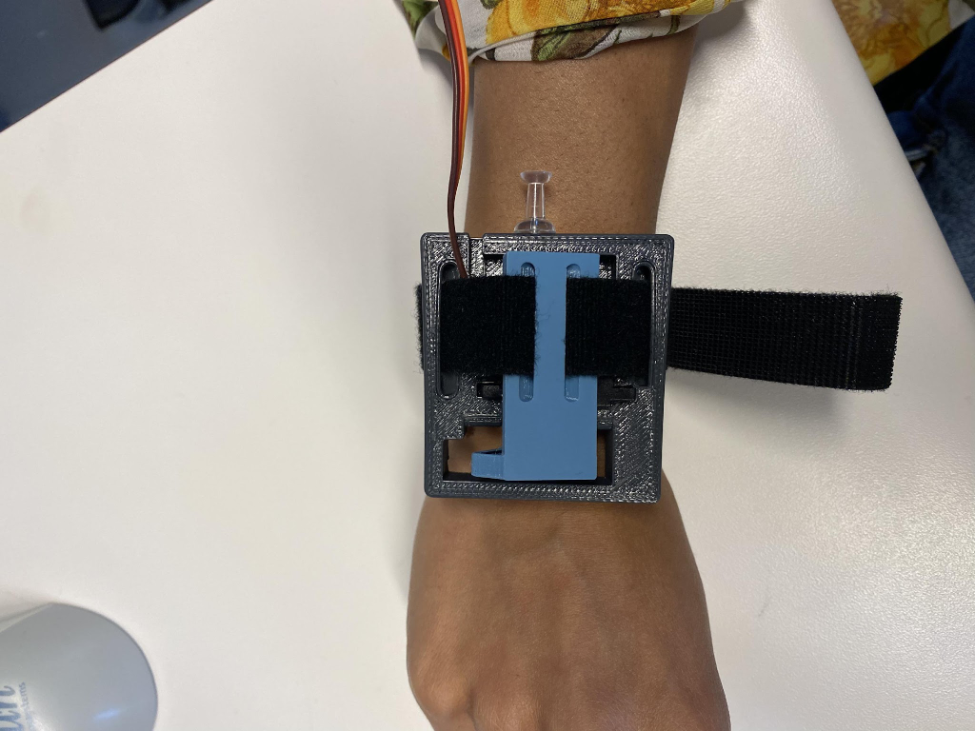
The custom wrist-worn haptic feedback devices: the vibrotactile device (left) and the wrist-squeezing device (right).
A Multi-Axis FBG-Based Tactile Sensor for Gripping in Space
Tactile sensing can improve end-effector control and grasp quality, especially for free-flying robots where target approach and alignment present unique challenges — but many conventional tactile sensing technologies are unsuited to the harsh environment of space.
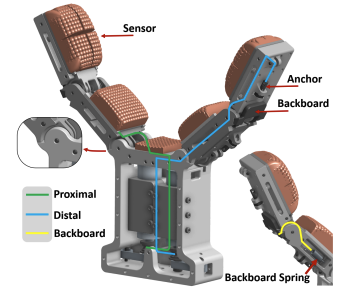
We developed a multi-axis tactile sensor that measures normal and shear strains in the pads of a robotic gripper using a single optical fiber with Bragg grating (FBG) sensors, which are immune to electromagnetic interference and can sample at over 1 kHz to detect dynamic events. We used finite element analysis to optimize the sensor design, increasing strain sensitivity at the fiber without compromising structural integrity. The final sensor was mounted on a custom two-fingered gripper and calibrated against a commercial multi-axis load cell with 96.2% RMS accuracy, and was demonstrated on tasks motivated by NASA’s Astrobee free-flying robots aboard the International Space Station — including detecting misaligned grasps, perceiving shear forces, and improving load sharing across contact areas in pinch grasps.
FEA analysis of sensor design with shear force application.
Medical Device Development
DynaRing: A Patient-Specific Mitral Annuloplasty Ring With Selective Stiffness Segments
Annuloplasty ring choice and design are critical to the long-term efficacy of mitral valve repair, but commercially available rings fail to account for the wide variation in annular dynamics across patients.
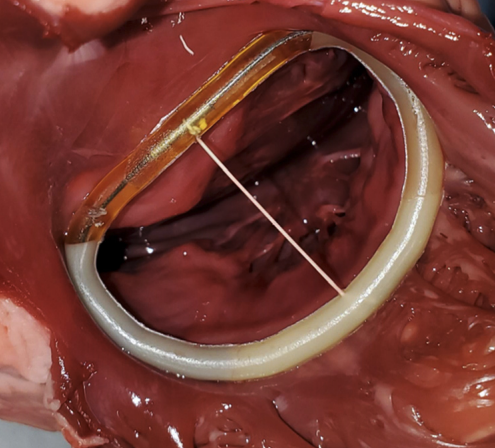
We developed and evaluated DynaRing, a selectively compliant annuloplasty ring composed of variable-stiffness elastomer segments, a shape-set nitinol core, and a cross-diameter filament that stabilizes a diseased annulus while preserving physiological annular dynamics. We evaluated the ring in porcine valves using an ex-vivo left heart simulator and performed a 150-million-cycle fatigue test to assess long-term durability, and developed a patient-specific design pipeline using finite element model optimization and patient MRI data. Our results show that DynaRing’s motion closely matches literature values for healthy annuli and outperforms a commercially available semirigid ring, and that segment stiffness can be tuned via Bayesian optimization to match a wide range of patient-specific annular geometries. This work is especially meaningful because a longer-lasting, better-fitting ring means patients need fewer repeat procedures — offering a more affordable and accessible intervention.
Left: DynaRing under cyclic fatigue testing on newly designed testing apparatus. Right: CAD design for motorized test setup used to evaluate the ring's variable-stiffness segments.
Work on Accessible Technology
“I’m ok because I’m alive”: understanding socio-cultural accessibility barriers for refugees with disabilities in the US
The number of refugees worldwide has doubled in the past decade, and many experience disabilities and mental health challenges compounded by violent or inhospitable conditions during displacement.
We interviewed six experts who serve refugees in the US to understand the socio-cultural accessibility barriers refugees with disabilities face — including inadequate language and cultural support systems — and conducted thematic analysis to identify directions for structural change, including improved access to comprehensive insurance coverage, earlier recognition of mental health challenges, and support navigating the host country’s complex healthcare system.
Structural accessibility barriers and service gaps facing refugees with disabilities in the United States
This scoping study examines structural barriers and service gaps facing refugees with disabilities in the United States, from the perspective of the experts who serve them.
Through semi-structured interviews with six experts who work with refugees, we found that refugees and their families are significantly impacted by disabilities and mental health challenges, and face structural barriers including navigating a complex healthcare system, geographic placements that limit access to employment or care, and difficulty accessing public transit. Our findings point to practical directions for improvement, including stronger structural support for refugees with disabilities and incentivizing healthcare providers to adopt more culturally aware language services.
“Fear is Grounded in Reality”: The Impact of the COVID-19 Pandemic on Refugees’ Access to Health and Accessibility Resources in the United States
The COVID-19 pandemic disproportionately affected refugees with disabilities and mental health challenges, an understudied population facing compounding barriers to care.
We conducted interviews with four experts serving refugees in Maryland during the first year of the pandemic to understand its impact on refugees’ access to health and accessibility resources. Our findings describe how the co-existence of the pandemic with a turbulent political environment exacerbated existing inequities faced by refugees, and identify strategies for resilience that emerged within the communities these experts serve.
3D Modeling
Three-dimensional Visualization of Harvestman Spermathecae using Confocal Microscopy
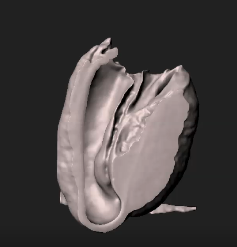
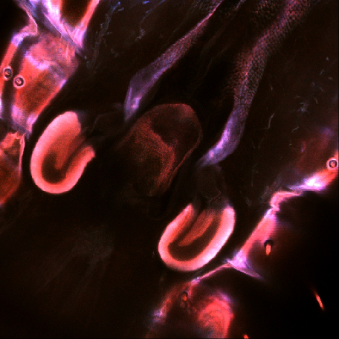
We used confocal microscopy to develop a non-invasive imaging and 3D-reconstruction method for the sperm storage organ of female arachnids; this produced the first-ever noninvasive imaging method for arachnids and the first 3D images of their sperm storage organs.
Left: 3D reconstructed model of a harvestman spermatheca generated from confocal microscopy imaging. Right: rotating 3D visualization of the same structure.
Biology
Spermathecal Variation in Temperate Opiliones
Sexual conflict theory predicts that female reproductive morphology should co-evolve with male genitalia and mating strategies, but this relationship remains understudied in harvestmen (Opiliones).
We examined spermathecal morphology across temperate harvestman species with differing mating systems, using dissection and imaging to characterize structural variation in the female sperm storage organs. Our findings show that spermathecal complexity varies with mating system, supporting the idea that female reproductive structures are shaped by sexual conflict and post-copulatory selection pressures.
First ever confocal microscopy image of harvestman spermathecae.